
PLUS Change In Depth: Changes in land cover over time – what does the future hold?
Written by Marco Guzzetti of KE.
Land cover change: past, present and future
Land use in Europe has been relatively stable over the past decades, but this is set to change in the future. Driven by different policies aimed at promoting sustainability across sectors, land use in Europe could undergo rapid transformations. These policies—spanning energy production, agriculture supply, and biodiversity conservation—can impact land cover both directly and indirectly. For example, renewable energy initiatives may convert agricultural land into solar farms, while conservation efforts may limit land use in certain areas. The impact of these policies varies, with some leading to significant changes and others having more subtle effects. Understanding these dynamics is essential for evaluating sustainable land management in Europe.
Research by the PLUS Change project
In this context, we set out to explore, investigate and understand the intricate interplay of EU policies, both overarching ones, such as the European Green Deal, and sectoral ones, such as the Common Agricultural Policy (CAP). By promoting sustainable practices and corresponding investments, these policies encourage a transition towards more resilient and environmentally friendly land management systems. Conversely, there are several sectoral policies and strategies that may indirectly affect land use, potentially in undesirable ways.
One key focus of PLUS Change’s research is to understand how policies at the European Union (EU) level impact land use and land cover across various member states. At the core of this research is a review of polices relevant to five key sectors—land use, energy, transport, urban planning, and waste management—all of which have a ripple effect on land use as Europe strives to meet its ambitious 2050 goals. To map these impacts, we used Causal Loop Diagrams (CLDs), which are routinely applied to analyse issues related to sustainability, and gathered insights from stakeholders to visualise the feedback mechanisms existing between sectoral policies and land cover change.
Sectoral influence on land use
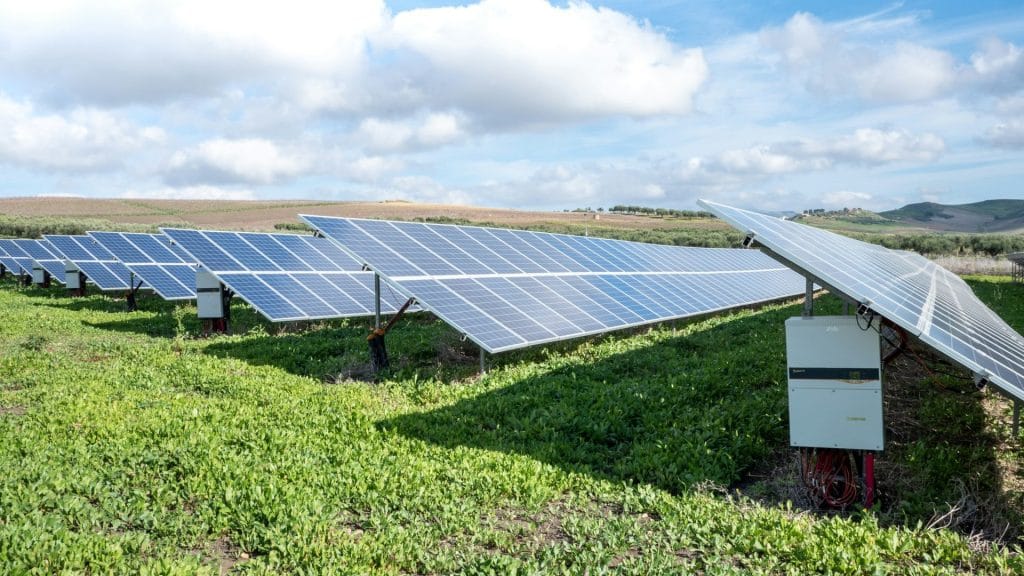
Each of the five key sectors—land use, energy, transport, urban planning, and waste management—has a profound effect on how land is used, even when land management is not their primary focus. For example, the push for renewable energy, outlined in the REPowerEU plan, demands significant land for solar and wind installations. This expansion can conflict with other land uses, particularly agriculture or natural landscapes. Innovative solutions, such as agro-photovoltaics, where land is used for both farming and solar energy production, are being explored to mitigate these conflicts. The EU’s Joint Research Centre indicates that using just 1% of the EU’s total agricultural area for agrivoltaic systems could potentially yield around 944 GW of installed capacity, exceeding the target of 720 GW set for 2030.
In the land use sector itself, policies like the European Green Deal aim to increase carbon sequestration through reforestation, while the 2030 Biodiversity Strategy focuses on restoring large areas of land and sea. The CAP also promotes sustainable farming practices and biodiversity protection, but these policies often intersect with others, creating both synergies and tradeoffs. For instance, while reforestation efforts contribute to climate goals, they can reduce the land available for food production or renewable energy projects.
The transport sector adds further complexity. Expanding transport infrastructure to meet connectivity demands often leads to habitat fragmentation and urban sprawl, with long-lasting effects on ecosystems and agricultural land. The EU’s Sustainable and Smart Mobility Strategy promotes greener transport solutions, like enhanced public transport, but building new roads and railways has substantial land requirements. Urban planning policies aim to counteract these pressures by integrating green infrastructure into city designs and expanding green spaces, ensuring that urban growth also supports natural habitats.
The waste management sector also plays a role in shaping land use. Policies like the Landfill Directive aim to drastically reduce waste going to landfills through solutions such as composting or incineration, freeing up land for recovery and restoration. However, reclaiming these sites presents long-term challenges, particularly concerning water quality and biodiversity, requiring careful planning to ensure they are sustainably restored. Further, composting efforts also demand land availability.
Key results and next steps
An overarching lesson from the PLUS Change project thus far is that land use is shaped by the simultaneous implementation of several sectoral policies. For example, the goals for sustainable development, e.g. carbon sequestration, can be achieved in different ways, through biological, geological, and technological approaches. On the other hand, their complementarity, and the possible emergence of tradeoffs, should be considered. For instance, the drive to expand forests for carbon sequestration may compete with the need for land for renewable energy installations, and low carbon transport infrastructure (e.g. electrified rail) can encroach on agricultural or natural areas.
To achieve Europe’s vision of becoming Net Zero and Nature Positive by 2050, a holistic approach is essential. Policymakers should ensure that sectoral policies are harmonised, and ultimately support sustainable land use. This alignment is essential to avoiding undesirable consequences, such as the loss of natural land, which could diminish carbon sequestration, ecosystem service provisioning, and climate resilience.
These findings offer valuable insights into the complex landscape of land use transformation, highlighting the importance of cross-sectoral collaboration. As Europe moves toward its 2050 goals, understanding the interactions between these policies will be key to ensuring that land use changes are both sustainable and equitable.
Next steps in the PLUS Change project include finalising the causal loop diagrams—both at the EU level and for 12 use cases—to map these relationships across social, economic and environmental indicators. This will then allow us to move to quantified assessments and policy recommendations.
Banner photo by Markus Spiske on Unsplash.