
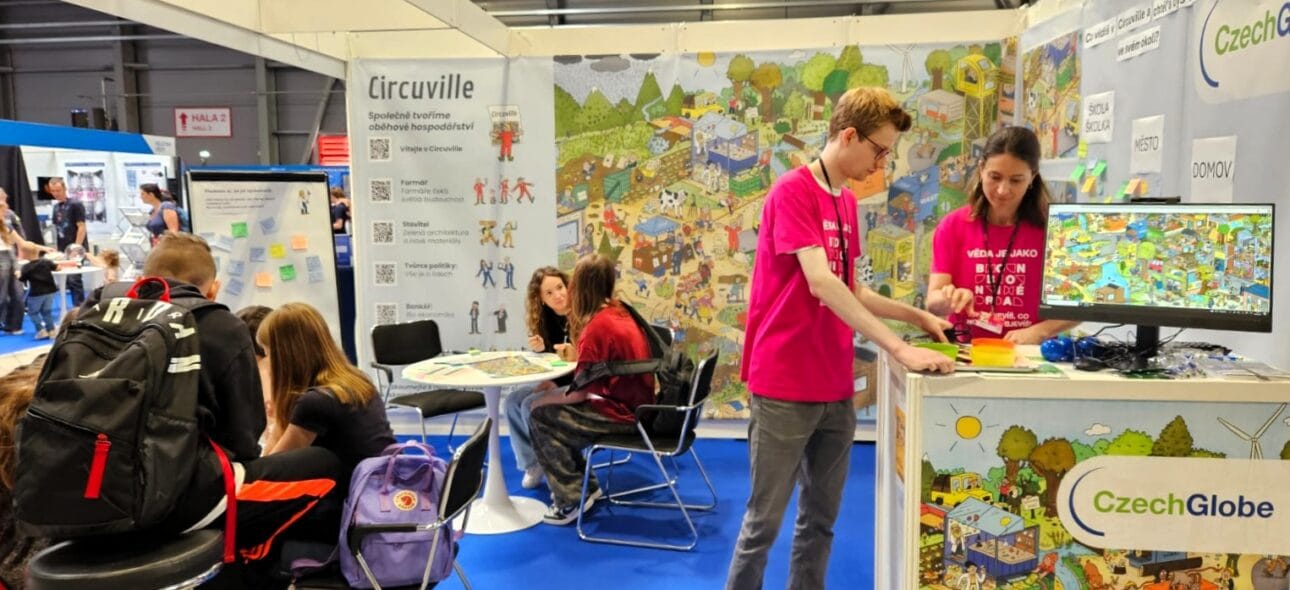
Science Fair 2025: Engaging kids & students in shaping a sustainable future
On 5-7 June 2025 CzechGlobe, the Global Change Research Institute of the Czech Academy of Sciences (CAS), participated in the Science Fair 2025 (Veletrh vedy), the largest popular educational science event in the Czech Republic.
Article by Vendula Kubušková of CzechGlobe and originally published on SustainableCZ.org.
Across the exhibition area of over 8,000 m², more than 58,000 visitors could view nearly 100 exhibitions from more than 90 exhibitors. Among the exhibitors were scientific institutions and educational, innovative and technological companies, science centres and, of course, more than 45 research institutes of the Czech Academy of Sciences (CAS). This year, CzechGlobe’s stand was represented by the Department of Human Dimensions, which focuses on environmental social science — the study of how people interact with the natural environment.
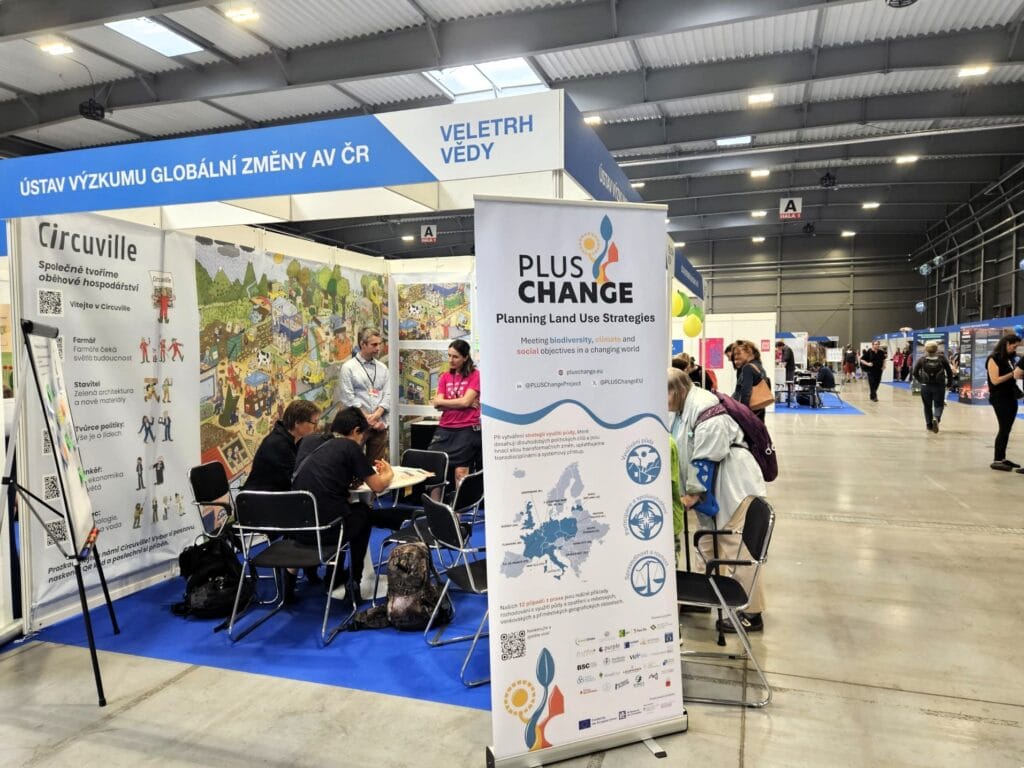
In our department, environmental social scientists explore how humans use land, water, and energy, and how those choices influence our planet. We use tools such as interviews, surveys, and historical research, and sometimes even art and playful methods — like our centrepiece for this fair: Circuville.
A fictional town for real-world change
Circuville is a fictional town that depicts many of ideas for how we can live in a way that is good for the planet. All of the ideas shown are already taking place somewhere in the world. In our work, we use Circuville to inspire discussions about what people like or dislike, how people can act, and what needs to be changed to make this imaginary town into a reality. We have used it with planners, policy makers and ordinary citizens and communities.
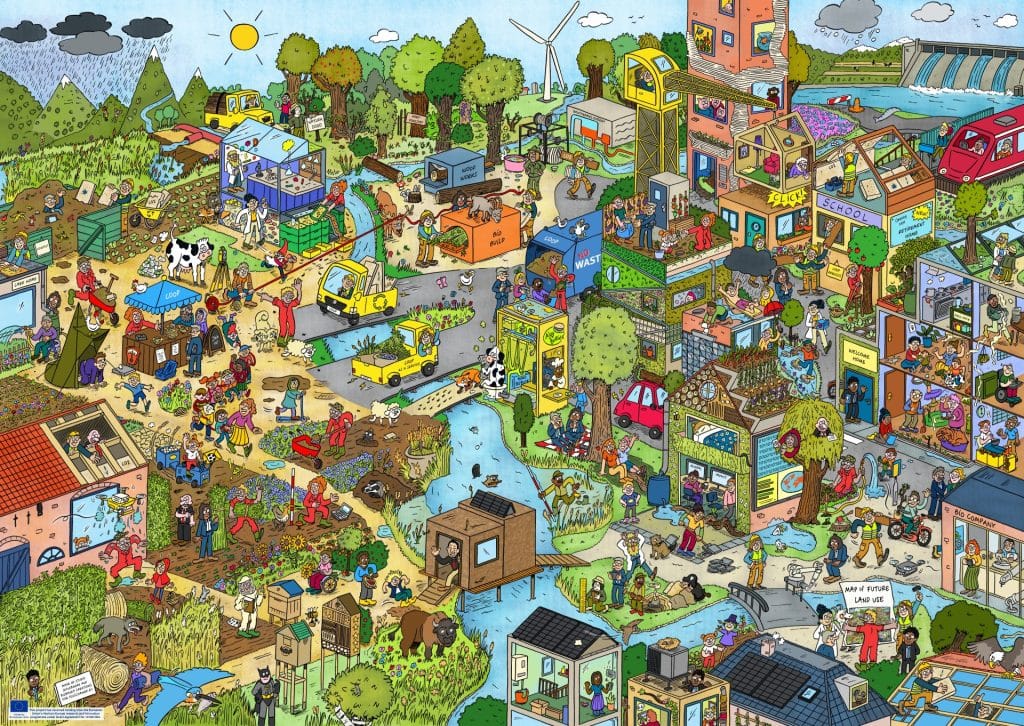
Circuville was created as part of the PLUS Change project, financed by the European Commission, which includes research on:
- How different types of information influence people’s environmental behaviour
- Historical patterns of land use and lifestyle
- Predictive computer modelling for land use under climate change
- Developing positive visions for sustainable futures and exploring how to achieve them
Activities at our stand
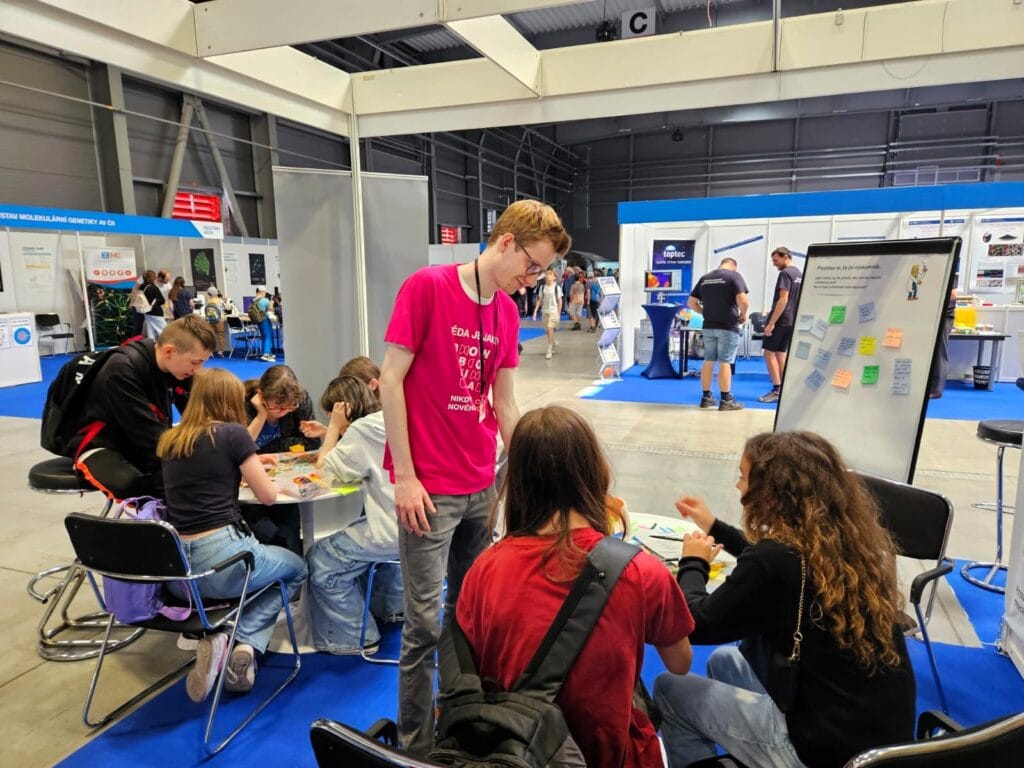
For three days, we welcomed visitors at our stand. Through conversations and activities, we offered interactive, educational experiences that allowed children and youth to step into the role of environmental social scientists.
The printed illustration of the town of Circuville was transformed into an activity where children were encouraged to search for creatures, situations or activities. For younger children, we had a list with 12 close-up snapshots from the larger illustration for them to find (e.g. the insect hotel, rooftop garden, and robot building a bridge). With the older kids and adults, we had a similar activity, but instead of using pictures, we had 15 places or topic-based situations for them to identify. The keywords were paired with questions that encouraged deeper thinking and sparked discussions, either with us or among themselves. The topics and questions here were, for example: Urban gardening – Why is it good to have an urban garden and how can it help people living in the city? Ecological waste – How can we manage waste in a way that is environmentally friendly?
Interested in using Circuville for your own educational purposes? We encourage you to download the Circuville worksheets on our Knowledge page. Don’t forget to share your experience with us, either on Social Media or via email!
As they went along, we encouraged them to write down something they would have liked to have in their school, town or home on a sticky note. These notes were then placed on a wall and together created a collection of ideas and wishes from our visitors. At the stand, visitors were also invited to contribute to a “scientific” flip-chart. For this activity, we asked children to tell us what problem they would like to solve or what question they would like to ask as a scientist. Some of the visitors tried to formulate the questions around the topics of sustainability, ecology and future.
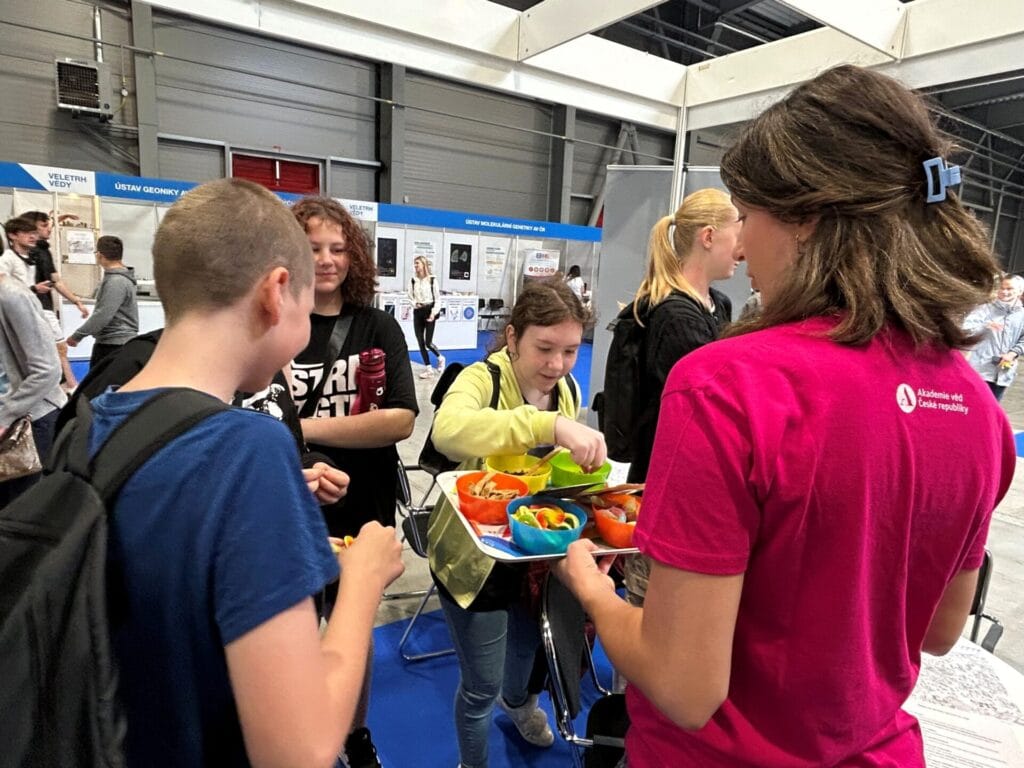
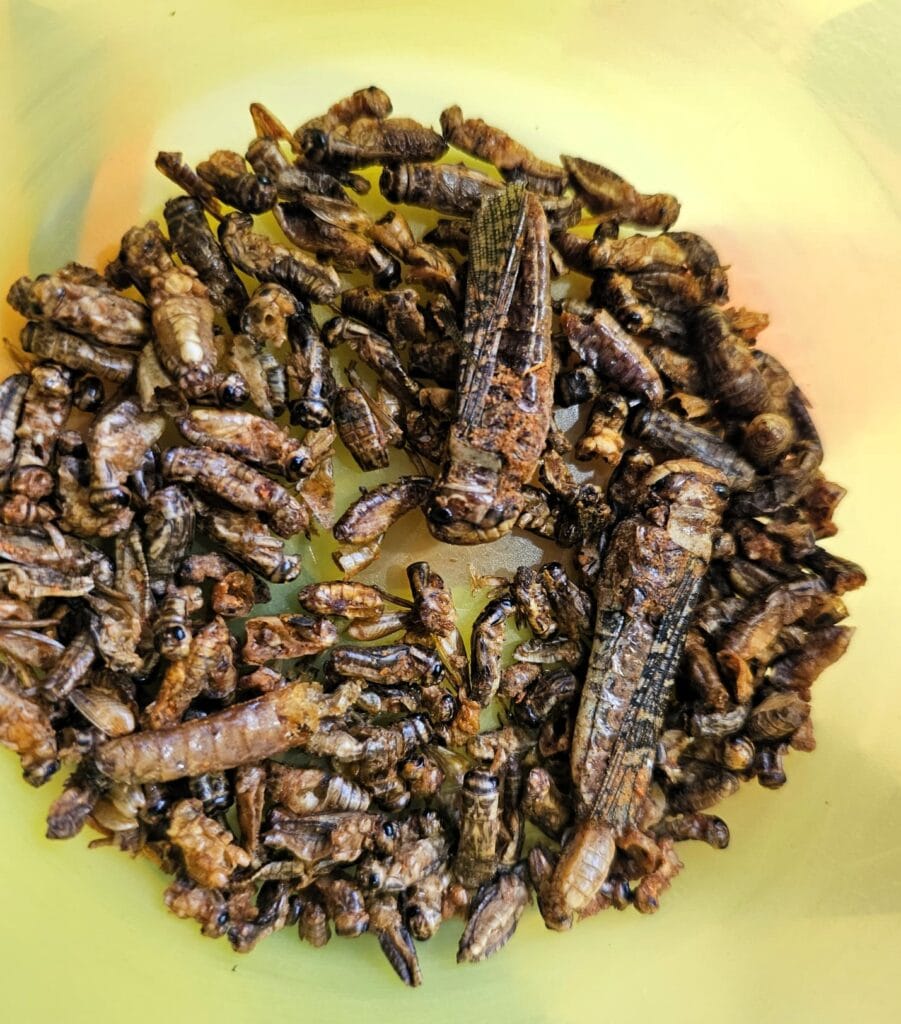
Finally, we took inspiration from the Circuville illustration, which features a laboratory for bacteria and insects—organisms with potential applications in both today’s world and in the future. Insects are already used as a source of protein, and in the future may be significantly more represented in our diet. We decided to use this fact as an opportunity, and bought a collection of different insects to taste. We invited passersby to come to our stand to have a taste of fried and spicy worms, grasshoppers or crickets. This unusual tasting experience sparked curiosity, conversation, and engagement.
Public engagement and impact
The stand was a constant hub of activity, attracting diverse age groups and sparking thoughtful exchanges. Our visitors were impressed by how Circuville combined real-world innovation with imagination, creating space for critical thinking about the future.
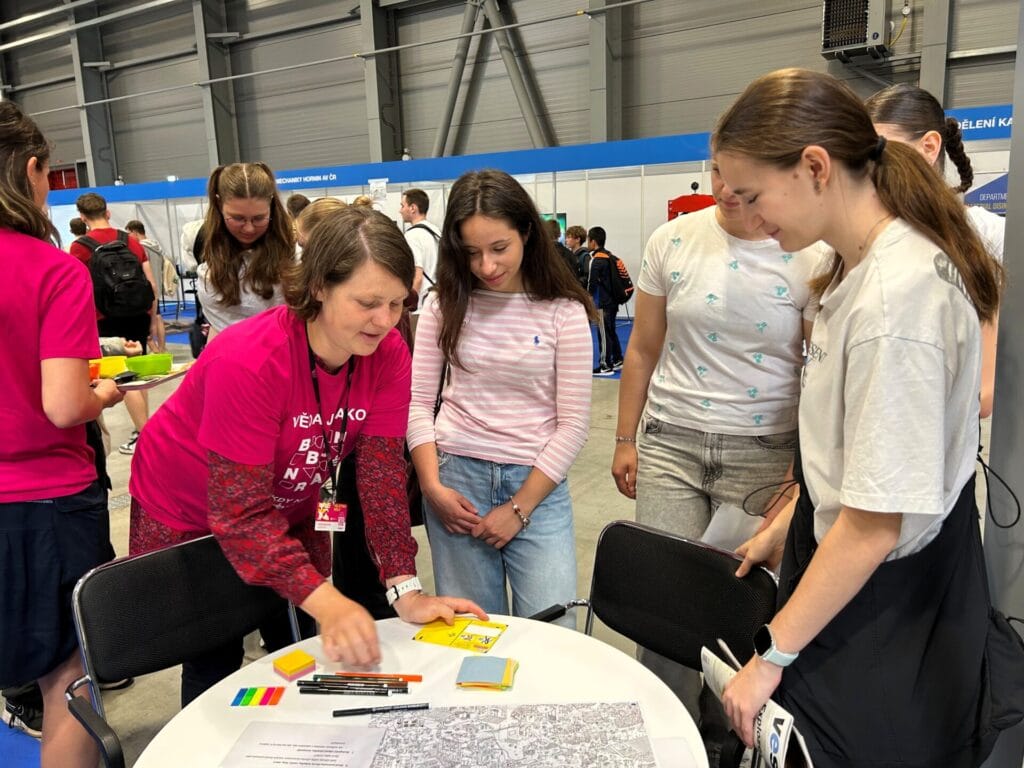
Through our hands-on, creative activities, we collected ideas and feedback from participants, encouraged children to think like scientists, helped families and educators associate serious environmental topics with something fun, and even shared our materials and ideas with teachers.
We believe that the event also strengthened CzechGlobe’s visibility as an institution operating in the field of social science, especially in making complex ideas about sustainability accessible and participatory.
Next steps
The aim of Circuville and our department of Human Dimensions was to open conversations and search for better solutions leading to sustainable living. We tried to communicate this to the public and let them experience our world. We are happy to share the activities we offered during the Science fair broadly (links above) and encourage people to discover more about Circuville by listening to stories of 5 characters (the farmer, builder, policy maker, banker and scientist) or following the continuous research within the PLUS Change project.